Lifestyle Guide
Oceanfront vs. Intracoastal vs. Inland
Understanding the lifestyle, cost, and maintenance implications of each waterfront category to help you choose the right South Florida home for your needs.
Three Distinct Lifestyles
The Waterfront Spectrum
South Florida real estate offers three fundamentally different waterfront experiences, each with distinct financial implications, lifestyle qualities, and long-term considerations. The choice between oceanfront, intracoastal, and inland properties shapes not just daily living, but investment performance and maintenance burden.
This guide examines the practical realities of each category, without the marketing narratives, helping you understand insurance costs, maintenance complexity, privacy factors, and true lifestyle experience before committing to a multi-million dollar investment.
Direct Ocean Exposure
Oceanfront Living: The Prestige & Penalty
Oceanfront properties command premium pricing (typically 40-60% above comparable intracoastal or inland properties) driven by unobstructed Atlantic views, psychological prestige of direct ocean access, and genuine supply scarcity. However, oceanfront living carries measurable costs and challenges that buyers often underestimate until ownership.
✅
Oceanfront Advantages
Unobstructed ocean views and sunsets; direct beach access without crossing properties; strong appreciation driven by supply scarcity; prestige and lifestyle desirability; optimal sunlight exposure and airflow.
❌
Oceanfront Challenges
Highest insurance costs and storm risk exposure; accelerated salt air corrosion; hurricane/flood regulations; limited privacy from beach; property tax implications; HOA fees often include beach insurance.
Hurricane & Flood Insurance Reality
Oceanfront properties fall into the most exposed flood insurance categories (VE, AE, or X-unshaded zones depending on exact elevation and storm surge modeling). Flood insurance is mandatory for any oceanfront property with a mortgage. Average flood insurance for oceanfront homes: $3,200-$8,500 annually for properties valued $3M-$6M (compared to $200-$600 for intracoastal properties).
Wind insurance rates similarly reflect oceanfront exposure. A typical oceanfront home ($4M) carries $18,000-$28,000 annual wind insurance compared to $6,000-$12,000 for comparable intracoastal property. Over a 10-year ownership period, insurance premium differential typically exceeds $400,000.
Salt Air Maintenance Premium: Oceanfront homes experience accelerated corrosion of metal fixtures, hardware, HVAC components, and structural elements. Annual maintenance budgets should include $15,000-$35,000 for ongoing salt-air preservation (power washing, re-coating, replacement of corroded elements). Intracoastal properties require approximately 40% less salt-air maintenance. Inland properties essentially eliminate this expense category.
Aesthetic Reality: Ocean views, while spectacular, occur primarily from master bedrooms, living rooms, and certain terraces. Guest bedrooms often face inland or side properties. Privacy is reduced, as neighbors can see your terrace, pool, and lifestyle activities from both sides. Early morning beachgoers and evening walks create constant ambient activity adjacent to your property.
Balanced Waterfront
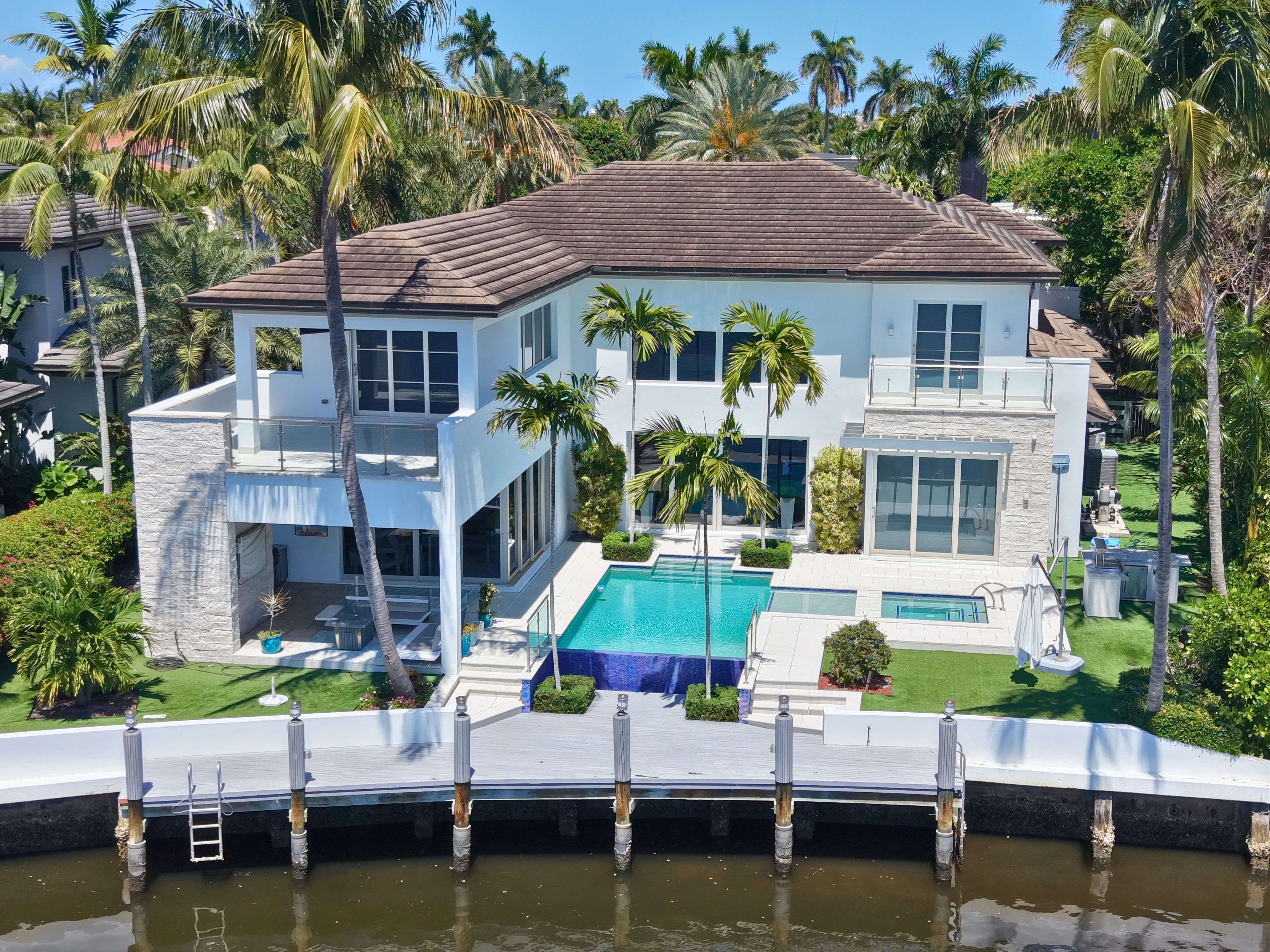
Intracoastal Living: Boating Paradise
Intracoastal properties occupy the "sweet spot" for many sophisticated buyers, offering genuine waterfront benefits without oceanfront's extreme costs and exposure. The Intracoastal Waterway stretches 1,100 miles with South Florida's most picturesque section flowing through Broward and Palm Beach counties, lined with premier waterfront communities.
Properties directly on the Intracoastal command premium pricing (typically 20-35% above comparable properties without water access) but cost 30-40% less than oceanfront properties with similar square footage.
⛵
Boating Culture
Direct boat dockage at residential properties (25-65 ft boats typical); no bridge tolls or marina slips required; easy access to Bahamas and Gulf Stream fishing; daily boating lifestyle fundamentally different from oceanfront.
🌊
Water Conditions
Calmer water than Atlantic; protected from direct hurricane swell; saltwater but less corrosive salt spray than oceanfront; excellent for paddleboarding, kayaking, and recreational boating.
🏡
Privacy & Lifestyle
More privacy than oceanfront (land-side views); water views without beach foot traffic; quieter ambient environment; community feeling from neighboring boat owners.
💰
Cost Advantage
25-40% lower flood insurance premiums; minimal salt-air corrosion; moderate wind insurance; overall carrying costs 40-50% less than oceanfront.

Dockage Considerations: Premium intracoastal properties offer in-ground or attached boat docks accommodating 35-65 foot vessels. Residential dock maintenance (pilings, decking, electrical systems) averages $2,000-$4,500 annually. Boat insurance, maintenance, and storage (if boat is stored off-site seasonally) represent additional ownership costs not directly tied to property.
Waterfront Communities: Las Olas Isles (Fort Lauderdale), Coral Ridge, Sunrise Key, Lake Osborne, Jupiter Inlet communities, and Gulf Stream offer exceptional intracoastal living. These communities often include yacht clubs, marine services, and boating-focused social infrastructure.
Value & Amenities
Inland & Golf Course Living
Inland properties, whether golf course communities, suburban estates, or upscale neighborhoods without water access, offer the most affordable entry point to luxury South Florida living while providing unmatched amenity packages and long-term value appreciation.
A $4M oceanfront property might cost $2.2M-$2.6M in equivalent quality inland. That $1.5M-$1.8M price differential, combined with dramatically reduced insurance and maintenance costs, creates compelling financial advantage for many buyers.
💎
Amenity Packages
Championship golf courses, country clubs, equestrian facilities, tennis academies. Communities like Old Palm, The Preserve, Medalist, Parkland offer unparalleled private amenities included with membership.
🎯
Land & Space
Larger lots (1-3 acres common in golf communities); more private space; room for tennis courts, pools, guest houses; architectural freedom without setback constraints of oceanfront.
🏘️
Community Quality
Established communities with strong demographic consistency; excellent schools; lower crime rates than urban waterfront; stable property values and low cap rate compression.
📉
Insurance Economy
Standard homeowners insurance only (flood not required); typical cost $3,000-$6,000 annually for $4M property; no water-related corrosion maintenance; minimal storm exposure.
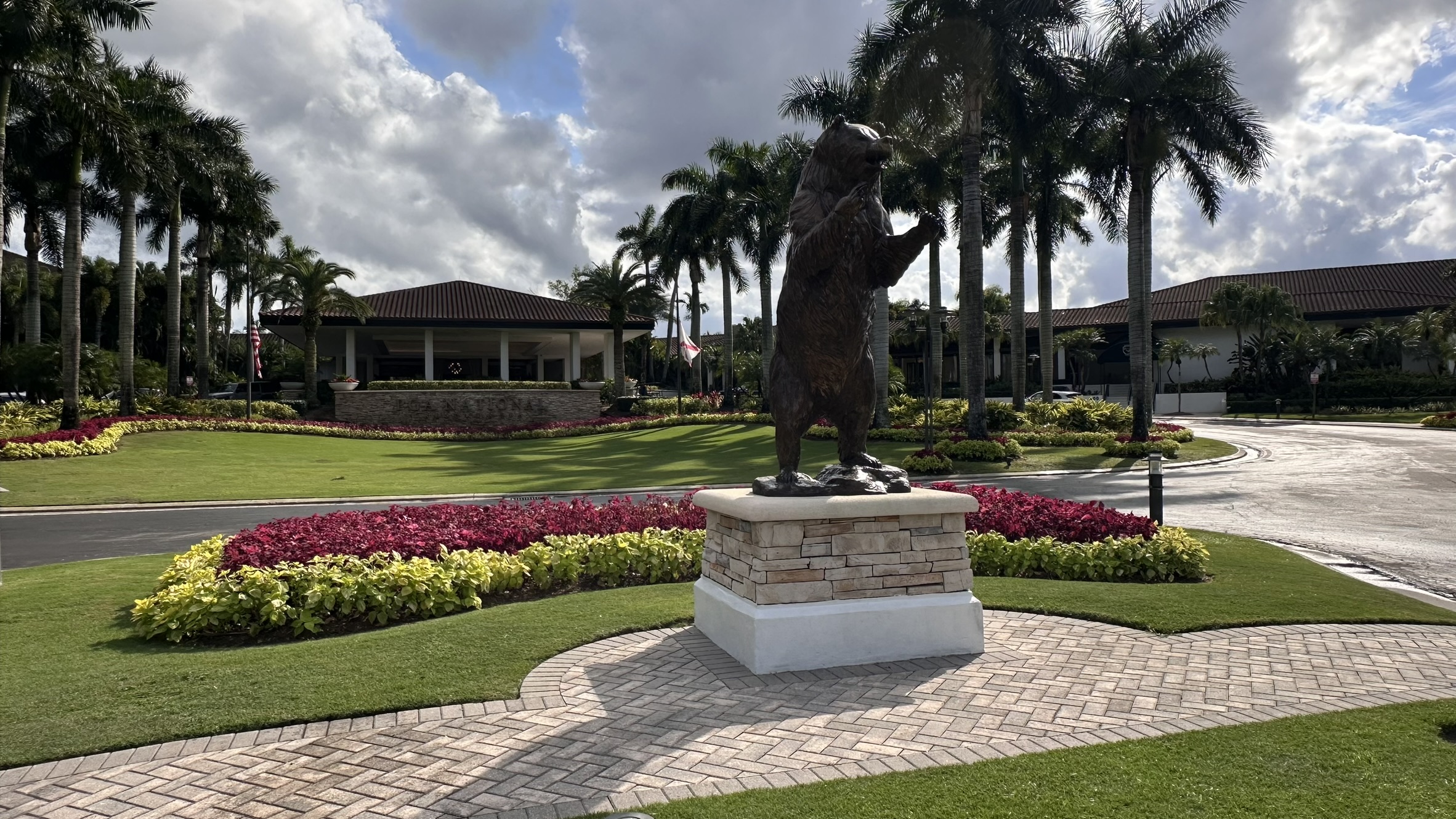
Top Inland Communities: Old Palm Golf Club (Palm Beach), The Preserve (Jupiter), Medalist (Hobe Sound), Parkland's elite neighborhoods, Coral Gables historic estates, Pinecrest, Weston. These communities maintain strong equity appreciation (6-8% annually) driven by scarcity of available land and established prestige.
Golf Course Integration: Living within a championship course community provides daily golf access without daily green fees ($80-$200+ per round). Initiation fees for private clubs typically $100,000-$500,000 with annual dues $15,000-$35,000, but these costs don't increase proportionally to home purchase price. A golfer spending $60,000 annually on courses could recoup that entirely through private club membership.
Financial Comparison
Insurance & Carrying Cost Reality
Insurance costs are the most quantifiable difference between oceanfront, intracoastal, and inland properties. Over a 30-year ownership period, insurance differentials often exceed property appreciation gains.
| Property Type |
Flood Insurance |
Wind/Hazard |
Annual Total |
30-Year Cost |
| Oceanfront ($4M) |
$5,200 |
$22,000 |
$27,200 |
$816,000 |
| Intracoastal ($4M) |
$1,200 |
$8,500 |
$9,700 |
$291,000 |
| Inland ($4M) |
$0 |
$4,800 |
$4,800 |
$144,000 |
Total 30-Year Carrying Cost Differential: Oceanfront vs. inland on equivalent $4M property = $672,000 in insurance premiums alone. Add maintenance and updates for oceanfront salt air corrosion, and true carrying cost differential approaches $800,000-$1.1M over three decades.
HOA Considerations: Oceanfront condos often include flood insurance and wind insurance in HOA fees, shifting the cost burden to the association and creating common area complexity. Intracoastal properties may include residential dock insurance. Inland properties typically feature lowest HOA costs ($400-$1,200 monthly for communities with amenities).
Upkeep & Durability
Maintenance Realities & Long-Term Durability
Oceanfront salt air exposure creates measurable accelerated degradation of property materials and systems. Understanding these maintenance burdens is essential before committing to oceanfront living.
Metal Hardware & Fixtures: Stainless steel hardware begins showing salt-air patina within 12-18 months. Door hardware, gate hardware, pool equipment, and outdoor lighting fixtures require replacement every 8-10 years (vs. 15-20 years inland). Pool cage screen requires more frequent replacement due to salt corrosion.
HVAC Systems: Oceanfront air conditioning units degrade 25-35% faster than inland units due to salt-air corrosion of condenser coils and electrical components. Typical oceanfront unit lifespan: 10-12 years; inland: 13-15 years. Maintenance costs for oceanfront units run 40% higher annually.
Paint & Exterior Finishes: High-quality marine paint requires repainting every 4-6 years oceanfront (vs. 7-10 years inland). Exterior trim, fascia, and architectural detailing corrode faster. Annual power washing essential oceanfront; recommended bi-annually inland.
Roofing Materials: Metal roofing experiences accelerated oxidation oceanfront. Tile roofing develops salt-related degradation in grout joints and roof penetrations. Expected roof lifespan oceanfront: 18-22 years; inland: 25-30 years.
Landscape Irrigation: Saltwater intrusion into irrigation systems corrodes lateral lines and emitters. Oceanfront irrigation systems require system flushes and component replacement 2-3x more frequently than inland properties.
Cumulative Impact: Annual maintenance budget oceanfront properties should be $18,000-$35,000 annually for mid-range luxury home ($3M-$4M). Comparable intracoastal budget: $8,000-$15,000. Inland: $5,000-$10,000. These differentials compound significantly over ownership periods of 10+ years.
Decision Framework
Which Lifestyle Is Right For You?
Choose Oceanfront If: You prioritize daily ocean views and psychological prestige above financial optimization; you spend significant time on your terrace/pool area; you view the property as personal lifestyle asset rather than long-term investment; you have capacity to absorb $25,000+ annual insurance and maintenance costs; you're comfortable with hurricane/flood risk profile.
Choose Intracoastal If: You're an active boater wanting daily access to Intracoastal and Bahamas; you value privacy and water views without oceanfront exposure; you want balanced lifestyle amenities at moderate carrying costs; you appreciate community of fellow marine enthusiasts; you want oceanfront prestige without oceanfront costs.
Choose Inland If: You prioritize financial efficiency and long-term wealth preservation; you're interested in golf course, equestrian, or community amenities; you value maximum privacy and space; you want to minimize storm risk and insurance burden; you prefer strong neighborhood demographics and schools; you view property as wealth asset with stable appreciation trajectory.